How an Integrated Response Helped a Displaced Family Regain Stability in Al-Dhale’e, Central Yemen
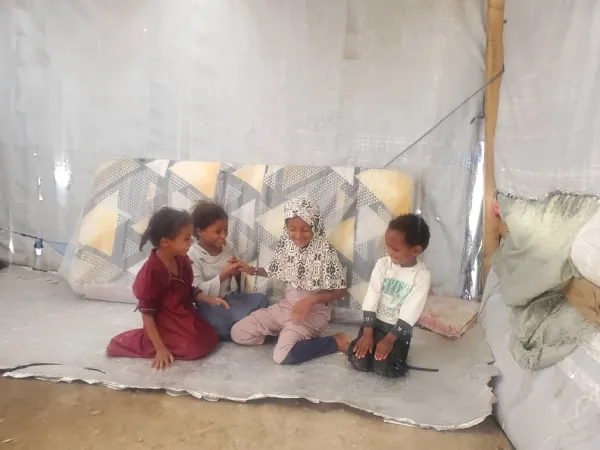
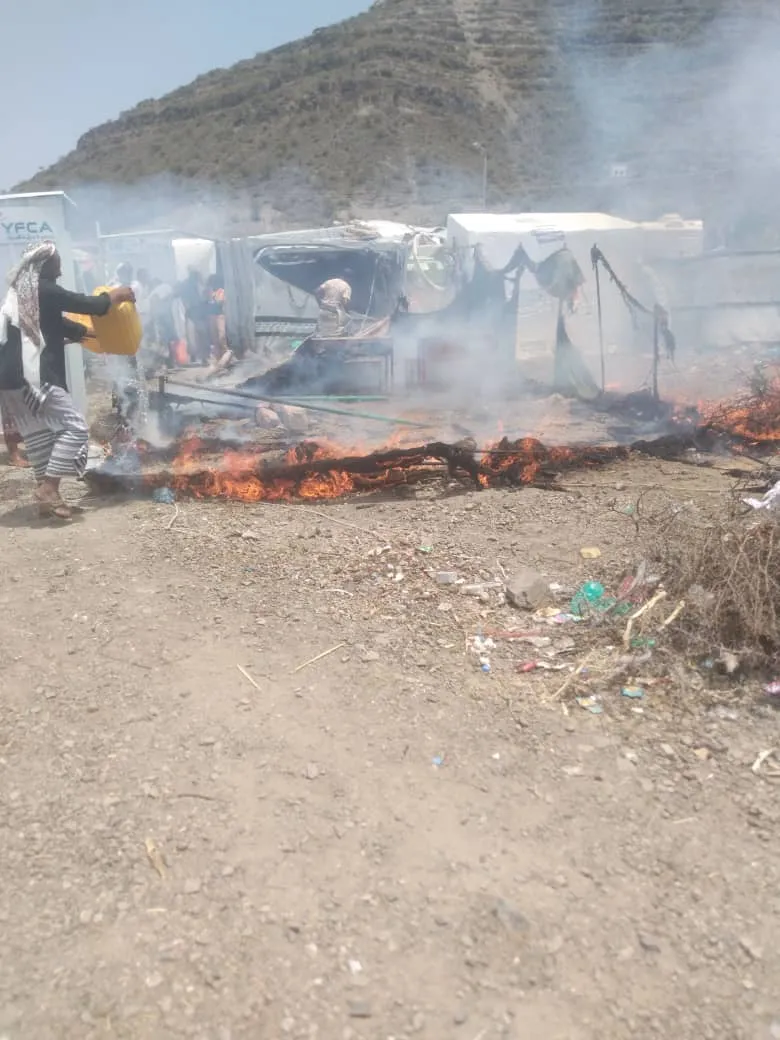
On July 16, 2026, the family of Raid Hassan Saleh Hussein lost almost everything it owned. A fire broke out in their shelter inside Al-Sawda Displacement Camp in Al-Dhale’e Governorate, central Yemen, and the flames destroyed the tent and everything in it, including food supplies, household items, clothing, and other basic necessities.
For a family already living in conditions of displacement and vulnerability and relying on an unstable daily income, losing its shelter was more than a material loss. It was a sudden crisis that threatened the family’s sense of safety and its ability to regain stability.
Anhar Ahmed, Raid’s wife, recalls the moments following the fire:
“Because of the fire, we lost everything. We were left without a tent and without anything we owned. We moved into one of our relatives’ tents… Imagine three families sharing one tent—what would that be like?”
The family was forced to share temporary shelter with other families. Although this provided immediate protection from being left outdoors, it was not a sustainable solution, especially with young children and the family’s need for privacy and stability.
A Rapid Response Within 24 Hours
In sudden crises, it is not enough for assistance to arrive; it must arrive quickly and respond to people’s actual needs.
Within 24 hours of the fire, Tamdeen Youth Foundation began following up on the family’s situation and assessing its needs, in coordination with partners and humanitarian organizations working in the area.
The response focused on identifying the most urgent needs and determining what each party could provide. This helped prevent duplication of assistance and ensured that the family’s remaining unmet needs were addressed.
As part of this coordinated response, the Yemen Red Crescent Society provided food and non-food assistance, along with a hygiene kit. This helped the family meet its basic needs during the first days after the fire.
However, follow-up revealed that one major gap had yet to be addressed.
The family was still without shelter.
Working Together to Fill the Gap
The response did not end with the delivery of the initial assistance.
The Tamdeen Youth Foundation team continued to monitor the family’s situation. A needs assessment showed that, important as the food and non-food assistance was, it was not enough to address the crisis in full. The family’s most urgent need was to rebuild a shelter that would allow it to move beyond its temporary dependence on others.
As part of the Integrated Life-Saving Assistance Project in Al-Dhale’e District, Tamdeen Youth Foundation provided the family with multi-purpose cash assistance amounting to 269,000 Yemeni rials.
The purpose of the cash assistance was not simply to provide the family with money. It was to give the family the ability to address the need it had identified itself and use the support according to its actual priorities, enabling it to return to its own shelter and regain stability.
This was where the impact of coordination became clear: an initial response covered the urgent needs; follow-up identified the remaining gaps; and a complementary intervention addressed the most pressing need.
The Family Chooses Its Needs and Rebuilds Its Life
Within just one week of receiving the cash assistance, the family was able to rebuild its emergency shelter and move back into it.
But the impact of the assistance went beyond rebuilding the tent itself.
Pointing to the shelter her family had returned to, Anhar says:
“The money helped us repair our tent again… This is my tent. Look at the tarpaulin and the wood—these are new. We bought them with the money we received.”
The family also used part of the assistance to cover other items lost in the fire, including clothing, some kitchen utensils, and bedding for the children.
She adds:
“We put our affairs in order, repaired the tent, and bought the things we needed so that we could return to our tent and settle down again with our children.”
This practical use of the assistance reflects the importance of needs-based support. Such support enables affected families to make decisions suited to their circumstances and priorities, instead of receiving standardized assistance that may not address everything the family has lost.
From Losing Shelter to Regaining Stability
When the project team visited the family after the shelter had been completed, the result was clear.
After spending days sharing a crowded tent with other families, the family had returned to a space of its own.
Anhar says:
“We returned to our tent… Today, we are stable with our children after having been without shelter.”
The change was not merely a move from one tent to another. The family had regained some of its privacy, created a safer space for the children, and gradually resumed its daily life.
A Response That Goes Beyond Providing Assistance
The story of Raid and his family shows that the effectiveness of a humanitarian response is measured not only by how quickly assistance arrives, but also by its ability to understand what affected people actually need.
Through the multi-purpose cash assistance, the family gained the flexibility to make its own decisions. They chose to allocate part of the support to rehabilitating their shelter, while using the remaining amount to meet basic needs that had been lost due to the fire.
In this way, the response was not merely a series of aid distributions, but rather a chain of complementary interventions: an immediate response, a needs assessment, coordination among partners, and flexible cash support that enabled the family to determine its own priorities.
Project Information
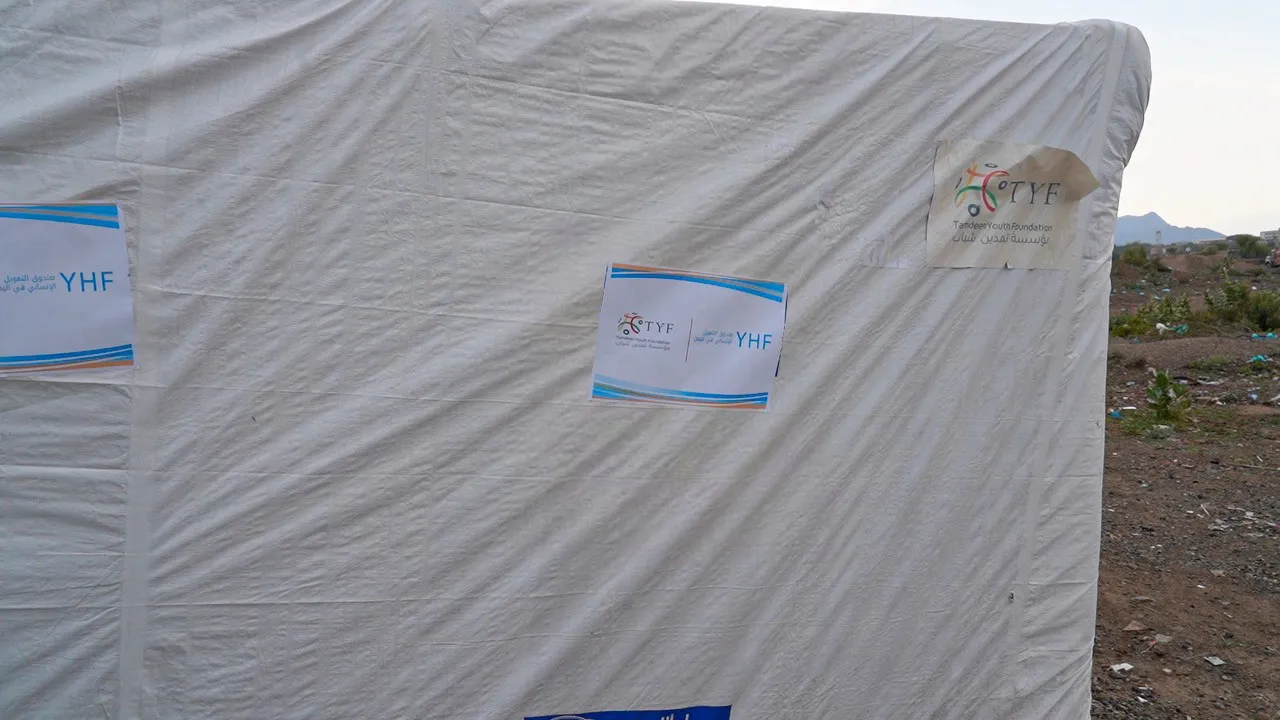
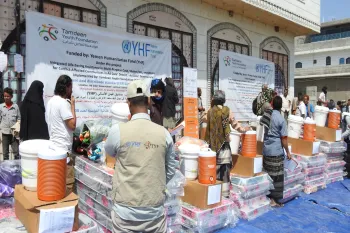
This response was provided under the Life-Saving Integrated Assistance Project in Al-Dhale’e District, Al-Dhale’e Governorate. The project is implemented by Tamdeen Youth Foundation (TYF) with funding from the Yemen Humanitarian Fund (YHF).
The project provides integrated interventions in the areas of multipurpose cash assistance, shelter and non-food items, and water, sanitation, and hygiene. Its aim is to help displaced families and families affected by conflict meet their basic needs and regain a greater degree of safety and dignity.