The Impact of Early Childhood Education on Breaking the Shackles of Disability: Malook’s Story from Marib
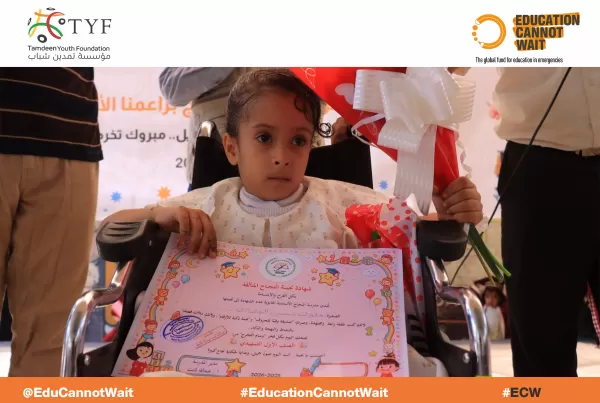
In the city of Marib, where war and displacement have forced a harsh reality on children that exceeds their young years, the child Malook Al-Wasabi was fighting her own battle in silence. A five-year-old girl, she carried a body exhausted by health challenges, yet her spirit was stronger than everything she faced.
Malook was born suffering from hemiplegia and a spinal hernia, in addition to her permanent need for a device to drain brain fluids (shunt). Despite undergoing three surgeries, her health suffering did not stop, nor were there any real opportunities for education or social integration, especially given the absence of early childhood education programs in Marib Governorate for many years.
Before the opening of early childhood education classes, many children in Marib, particularly those with disabilities, lived in harsh educational and social isolation. There were no educational environments prepared to receive them or help them learn and interact in their early years, which deprived them of the most critical stage for personality building and acquiring basic skills.
However, this reality began to change with the implementation of the Early Childhood Education program by Tamdeen Youth Foundation (TYF), supported by Education Cannot Wait (ECW), as part of the "Climate Induced Emergency Response in Yemen" project.
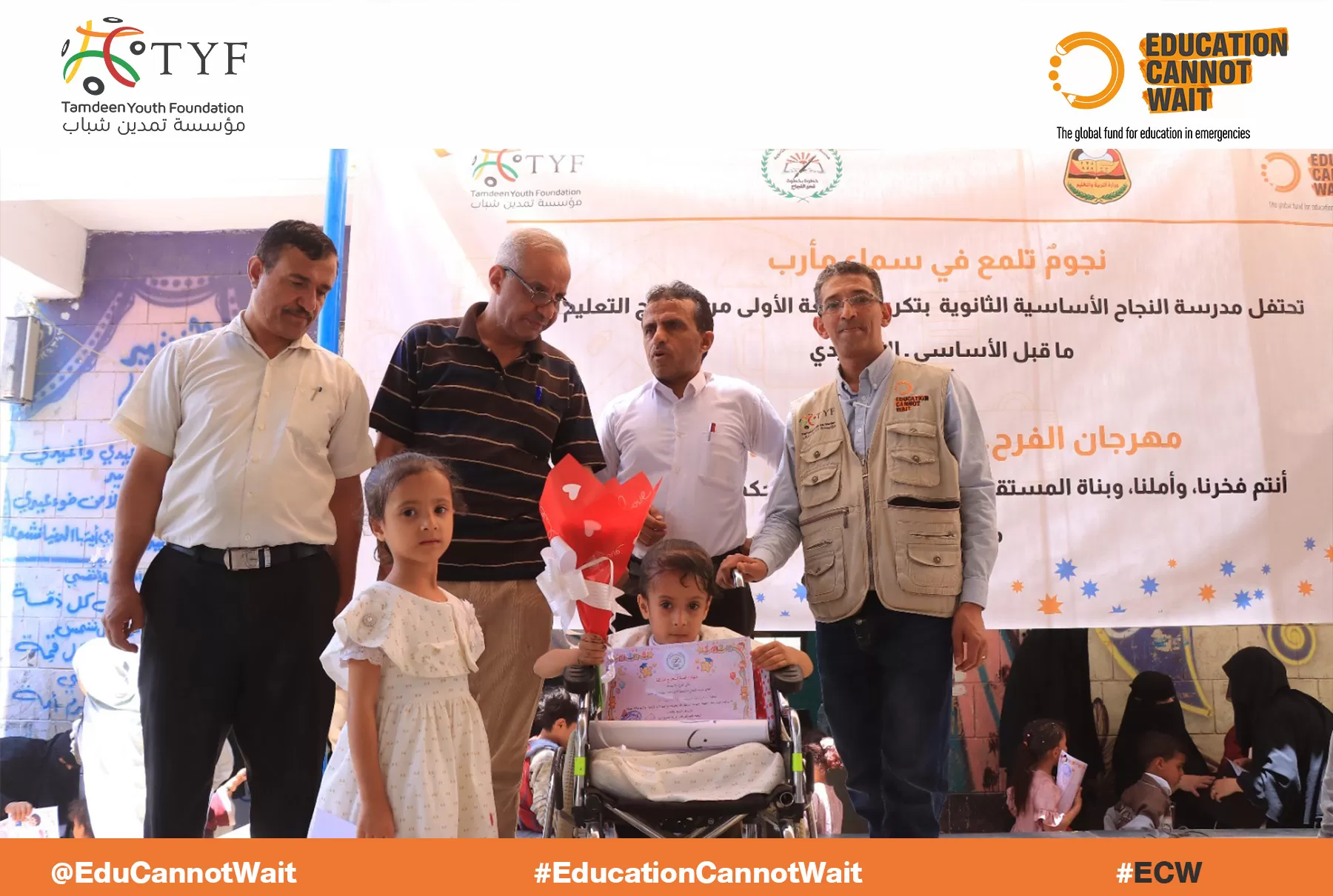
For the first time in the history of Marib Governorate, early childhood education classes were opened in public schools in the districts of (Marib City, Al-Wadi, and Harib), granting thousands of children a new chance for learning and life—and Malook was among them.
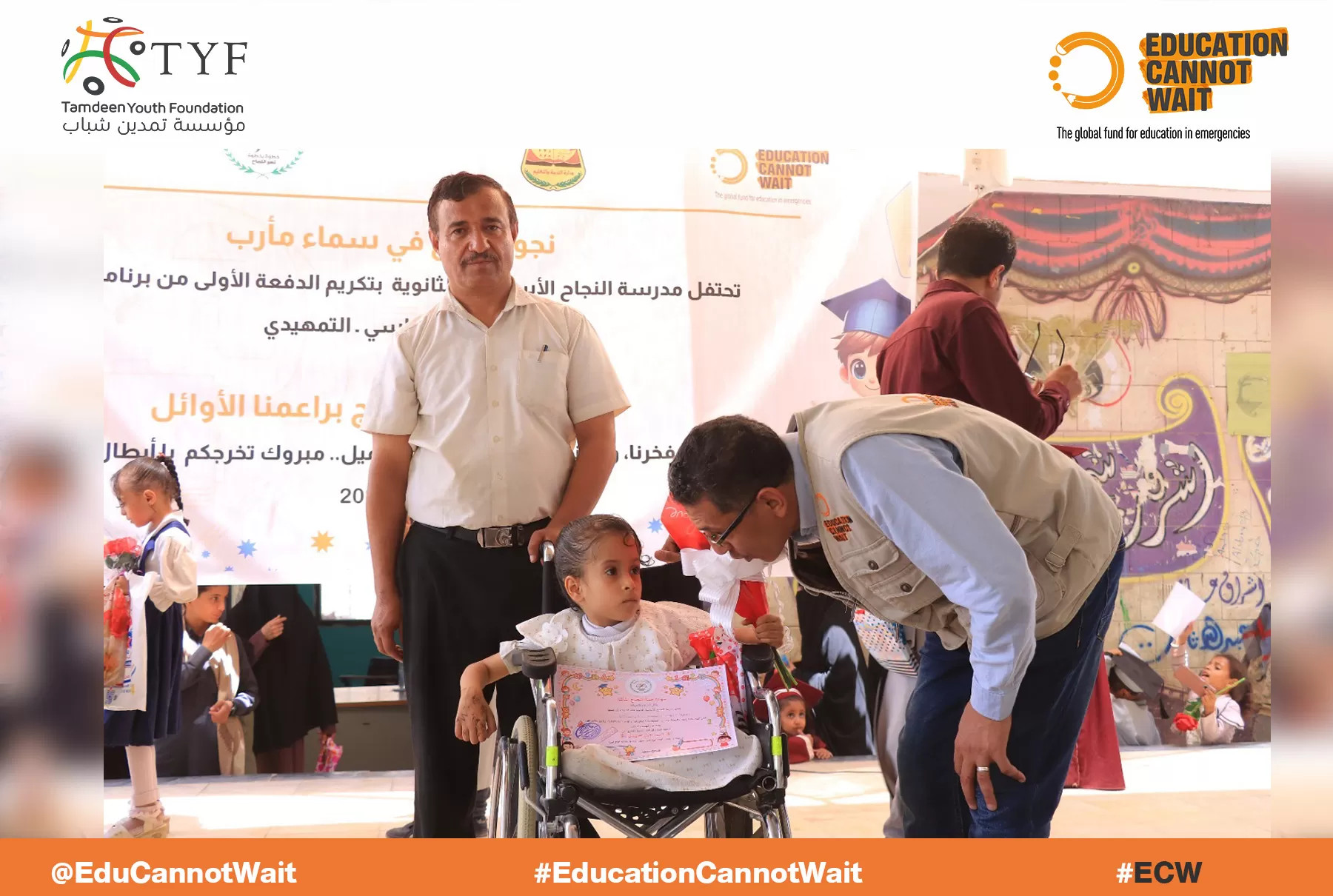
In the beginning, her mother would push her daily in a small stroller to reach Al-Najah School, amidst a constant fear that her daughter would not be able to integrate or continue her education due to her health condition. But inside the classroom, the features of transformation appeared quickly.
Malook says with a smile that does not hide her pride:
"I love my school very much. I feel proud wearing the graduation gown and holding my certificate in my hand. Here, I learned how to write the first letter of my name."
Inside the class, it wasn’t her disability that drew attention, but rather her intelligence, presence, and increasing self-confidence. She began participating in educational activities, answering questions with enthusiasm, and attempting to write and draw with determination and calmness, as if telling everyone that will is stronger than any obstacle.
Her teacher, Naowah Lajda'a, says:
"Malook is an exceptional child; her intelligence and wit made me not even notice her disability at first. She was keen on participating and interacting remarkably, and her transformation from a shy girl to a proactive and confident one was among the most beautiful successes we witnessed inside the classroom."
As for her mother, Um Shaker Al-Wasabi, she describes the transformation her daughter experienced as something greater than just education:
"Malook suffered a lot, and I was afraid she would be deprived of her right to education because of her health condition and the absence of these classes in Marib. This project did not just give my daughter a chance to learn; it gave her a new life. She has become more confident in herself, happier, and feels today that she is just like any other child."
Malook is no longer just a child facing motor difficulties; she has become a story of hope reflecting how education can change children's lives when given the right opportunity. The program helped her break the isolation of disability, integrate with her peers, and discover her latent potential in a safe educational environment that considers her psychological and educational needs.
The Early Childhood Education program, implemented by Tamdeen Youth Foundation (TYF) with support from Education Cannot Wait (ECW), is a pioneering and unprecedented step in Marib Governorate. It targeted 43 schools and reached 2,773 children, with a focus on the most vulnerable and those with disabilities.
The program also worked on supporting the educational process by providing textbooks, recreational kits, and play-based learning activities, in addition to school feeding and teacher incentives, contributing to the creation of a stable and inclusive educational environment for children affected by crises.
Malook’s story is not just a tale of a child who succeeded in overcoming her health circumstances; it is a message confirming that investing in early childhood education is an investment in a fairer and more humane future, and that when a child finds someone who believes in their abilities, they can create a new beginning for themselves regardless of the challenges.
#EducationCannotWait
#QualityEducation
#ECW