Launch of the Strategic Planning Workshop for the National Reference Group in Aden to Review Progress on Grand Bargain Commitments
Aden – June 21, 2026
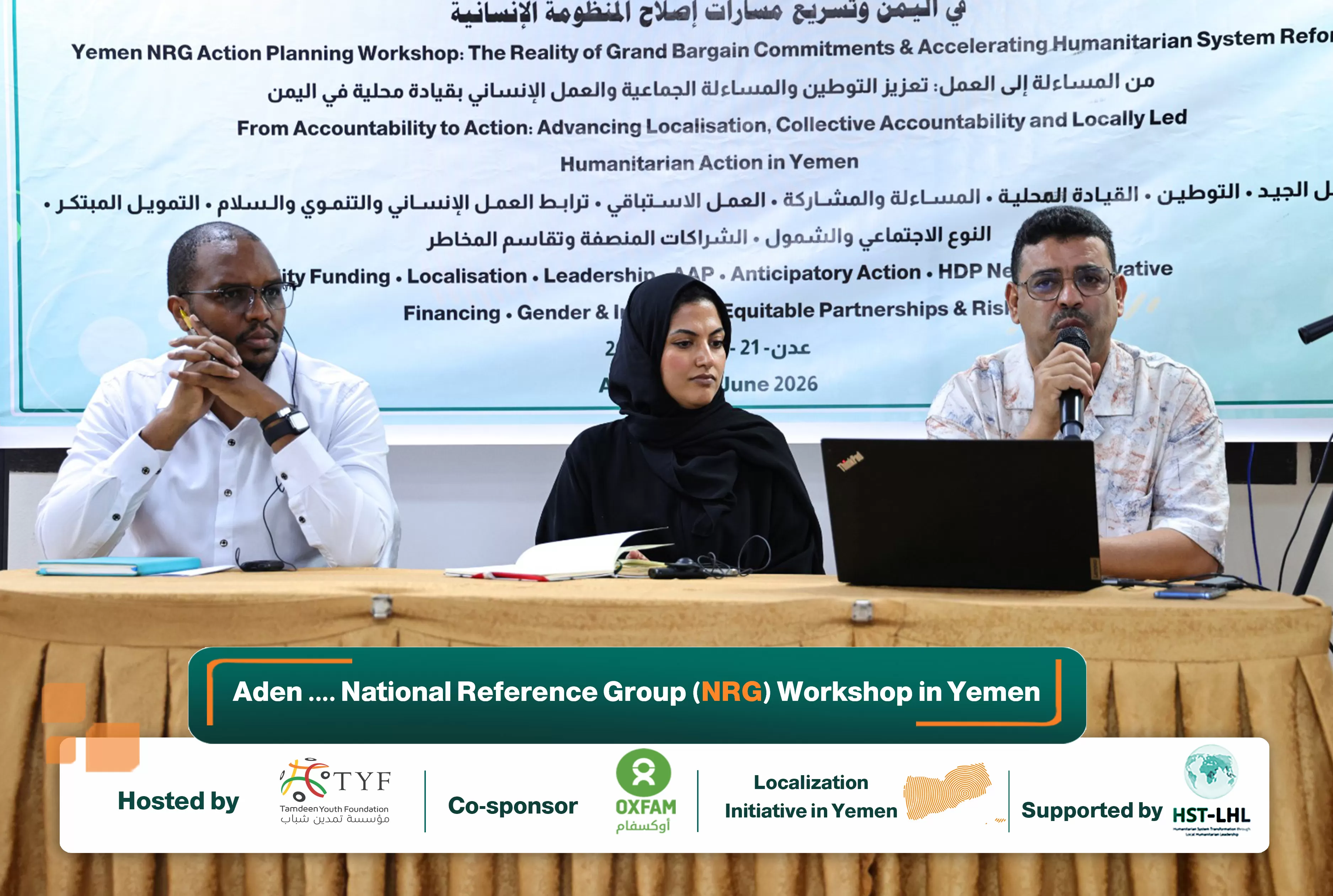
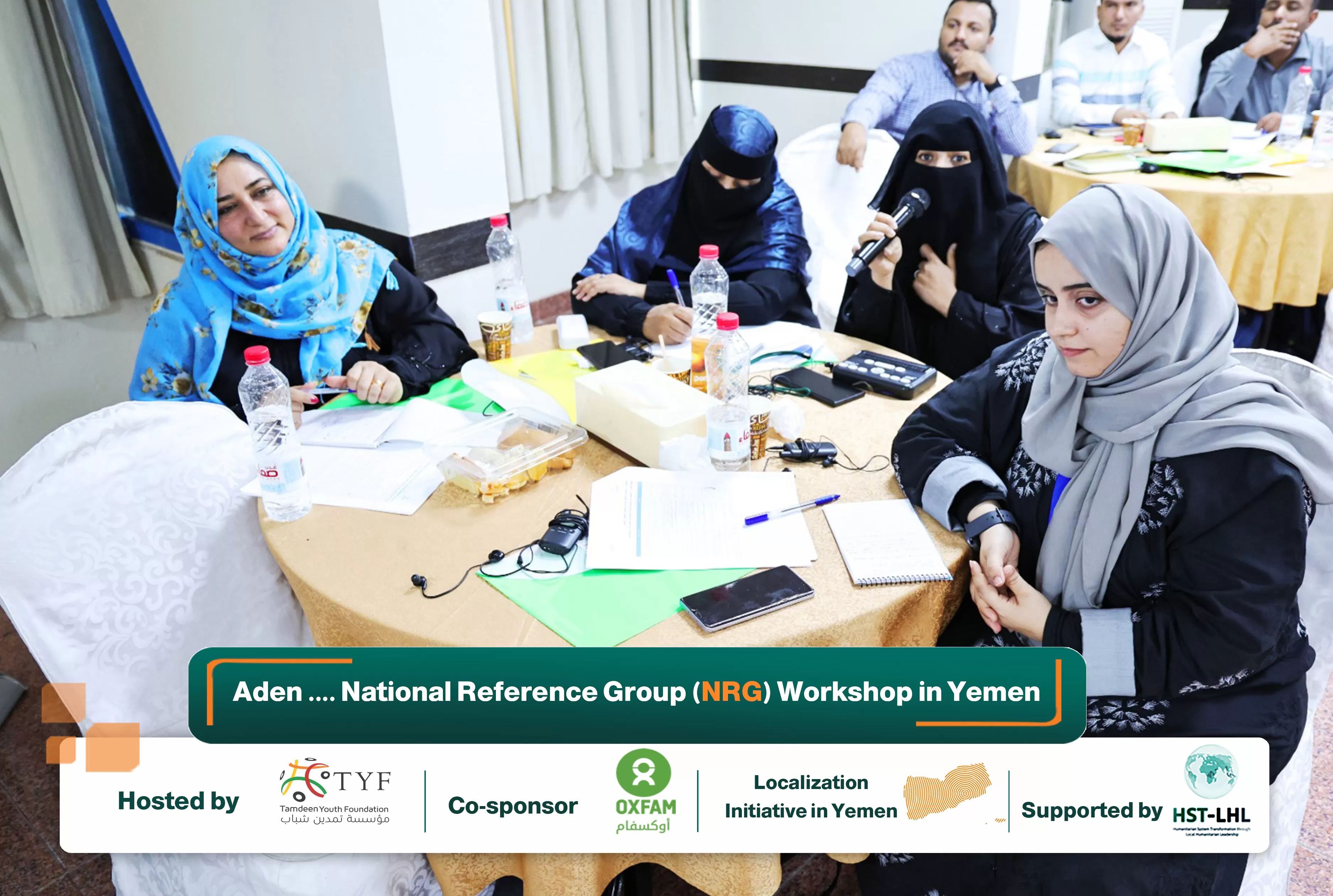
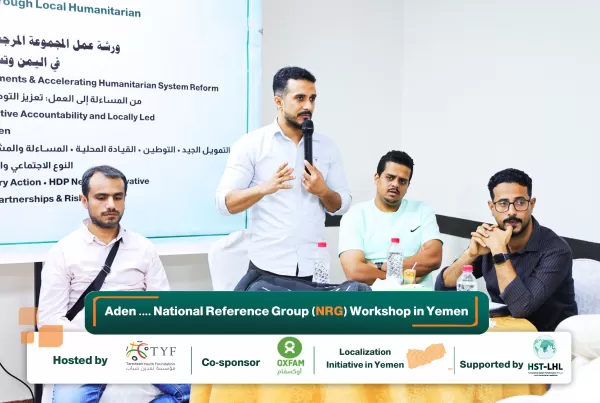
The strategic planning workshop for the Yemeni National Reference Group (NRG) kicked off today in the city of Aden. The three-day event brings together 62 participants representing local and national civil society organizations, women's organizations, organizations for persons with disabilities, UN agencies, international organizations, and donors. Also in attendance are government representatives from the Ministries of Planning and International Cooperation, and Social Affairs and Labor, as well as representatives from 16 Yemeni governorates, underscoring the national character of the Reference Group.
Hosted by the Tamdeen Youth Foundation (TYF) in partnership with Oxfam, facilitated by the Yemen Localization Initiative (YLI), and supported by the EU-funded "Humanitarian System Transformation through Local Humanitarian Leadership (HST-LHL)" project, the workshop aims to develop a multilateral accountability mechanism to track the implementation of the Grand Bargain commitments in humanitarian action in Yemen. It also seeks to strengthen pathways for reforming the humanitarian system by supporting localization, embedding local leadership, and promoting collective accountability and equitable partnerships among various actors.
The opening session emphasized the importance of translating international commitments into practical practices that contribute to building a more just and effective humanitarian system, while enhancing the role of local actors in leadership and decision-making.
The session also discussed the humanitarian situation in Yemen, where approximately 22.3 million people require humanitarian assistance and protection amid compounding challenges related to food insecurity, displacement, funding gaps, and difficulties in humanitarian access.
Over the coming days, the workshop will focus on reviewing the accountability report, identifying priorities, and drafting the NRG's action plan for 2026–2028, in addition to preparing the Yemeni position paper for the Grand Bargain Annual Meeting in Geneva.
Emphasizing the Strengthening of Localization and Local Leadership in Yemen's Humanitarian System
The opening speeches at the National Reference Group workshop in Aden highlighted the importance of strengthening the localization pathway in humanitarian action, embedding local leadership, and translating international commitments into tangible practices on the ground.
NRG Coordinator Abdulqawi Hajeb welcomed the participants, praising their commitment to fostering dialogue and joint action to improve humanitarian response mechanisms, enhance accountability, and empower local actors to lead humanitarian efforts.
For his part, Oxfam representative Mike Cosgrave stressed that the project aims to foster genuine local leadership within the humanitarian system, increase the efficiency of humanitarian funding directed at local and national entities, and expand spaces for shared decision-making.
Lulwa Ali, representative of the UN Office for the Coordination of Humanitarian Affairs (OCHA), affirmed that the primary challenge today lies in translating the Grand Bargain commitments into actual implementation and enhancing the participation of local actors in leadership and decision-making.
Technical Sessions Reviewing the Accountability Report Reveal Challenges in Funding, Partnerships, and Local Participation
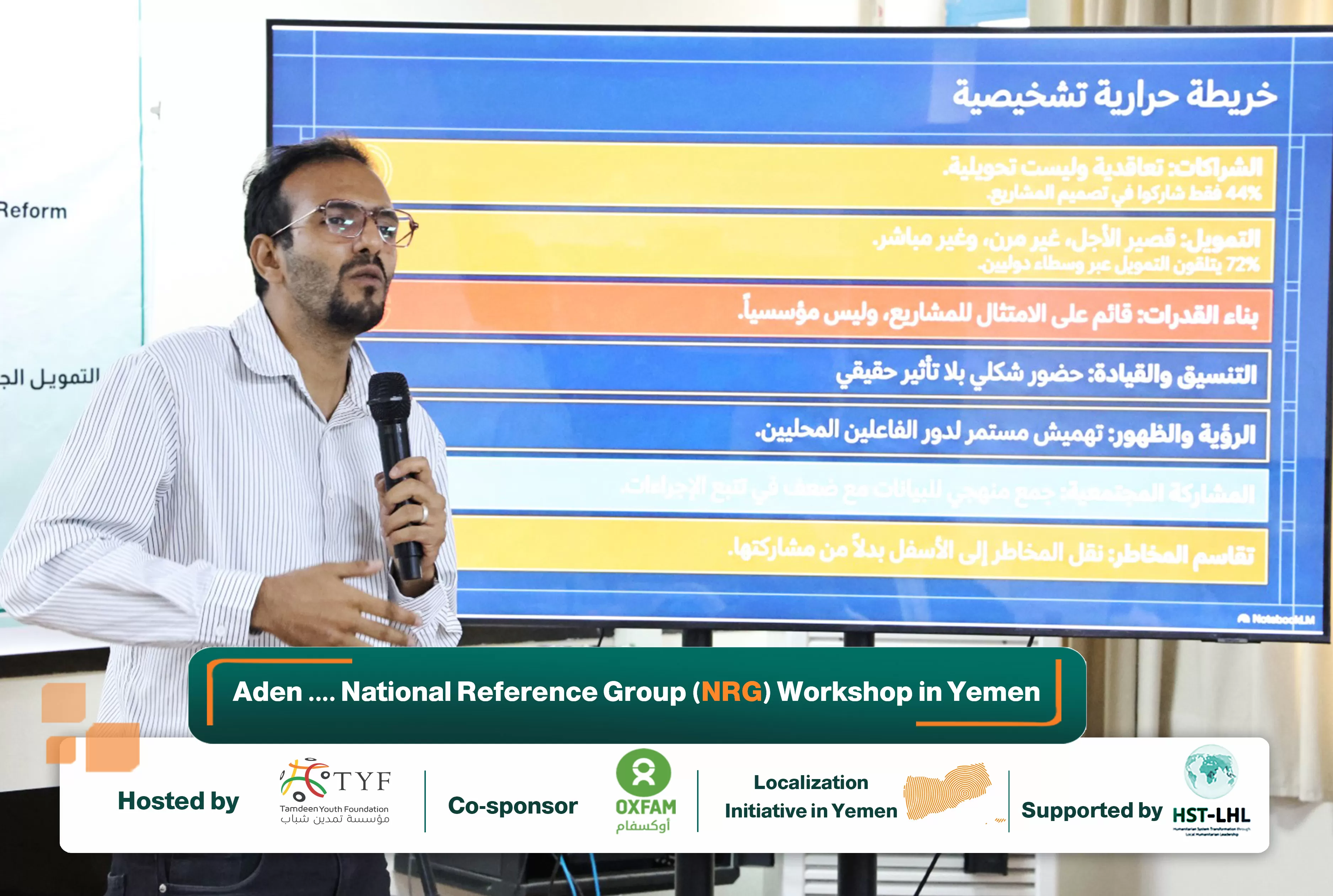
Following the opening session, the workshop transitioned into technical sessions to review and endorse the preliminary findings of the Grand Bargain accountability report in Yemen for 2026.
The findings revealed persistent structural challenges across several areas, most notably the quality of humanitarian funding, limited participation of local actors in decision-making, and weak equitable partnerships and risk-sharing, alongside issues related to accountability and community engagement.
Participants also discussed proactive action and the nexus between humanitarian action, development, and peace, engaging in a collective review of evidence and data to ensure the accuracy of the findings before their inclusion in the final report.
The sessions underscored the importance of strengthening shared accountability tools and developing more effective monitoring mechanisms to measure progress on the Grand Bargain commitments.
Broad National Participation Reflects the Inclusive Nature of the Reference Group in Yemen
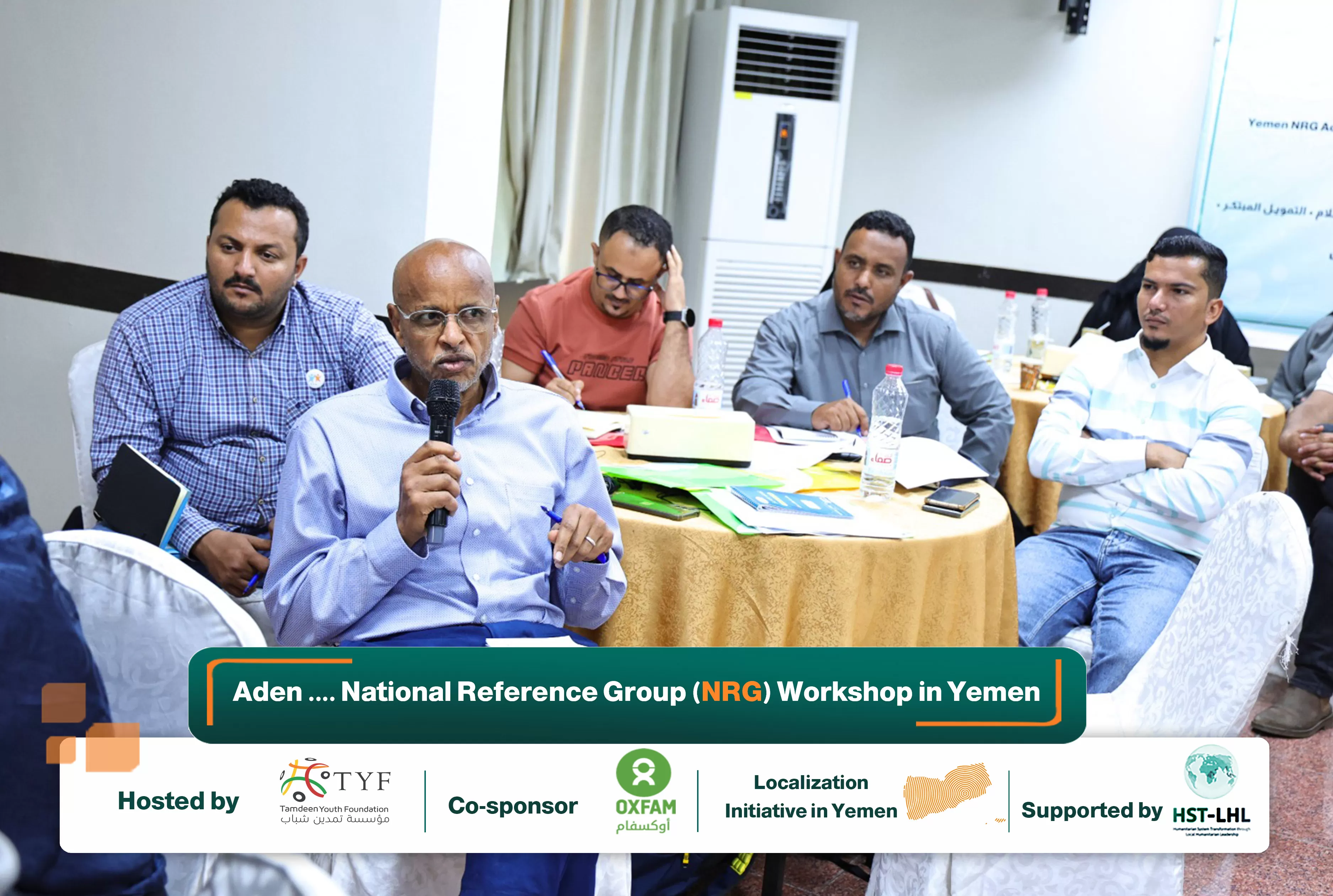
The National Reference Group workshop in Aden witnessed broad participation from various Yemeni governorates, reaffirming the national and inclusive nature of the group.
The participants included local and national civil society organizations, women's organizations, organizations for persons with disabilities, UN agencies, international organizations, and donors, in addition to government representatives acting as observers.
Organizers emphasized that this diversity enhances the quality of dialogue and the exchange of expertise, contributing to the formulation of shared priorities that support the implementation of the Grand Bargain commitments in Yemen.
The upcoming days are expected to focus on drafting sectoral action plans and reviewing good practices, culminating in the adoption of the National Action Plan (2026–2028) and the Yemeni position paper for the annual meeting in Geneva.
The National Reference Group
The National Reference Group is a coordination and accountability mechanism for the Grand Bargain commitments in Yemen. It operates within the framework of the localization initiative to promote a more equitable and effective humanitarian system by generating evidence, fostering multilateral dialogue, and supporting reforms in the humanitarian sector.
#National_Reference_Group
#Grand_Bargain
#Localization
#Humanitarian_Action
#Yemen
#Tamdeen_Youth_Foundation
#Oxfam